
China Food Trailer: A Culinary Journey on Wheels
2026-11-02
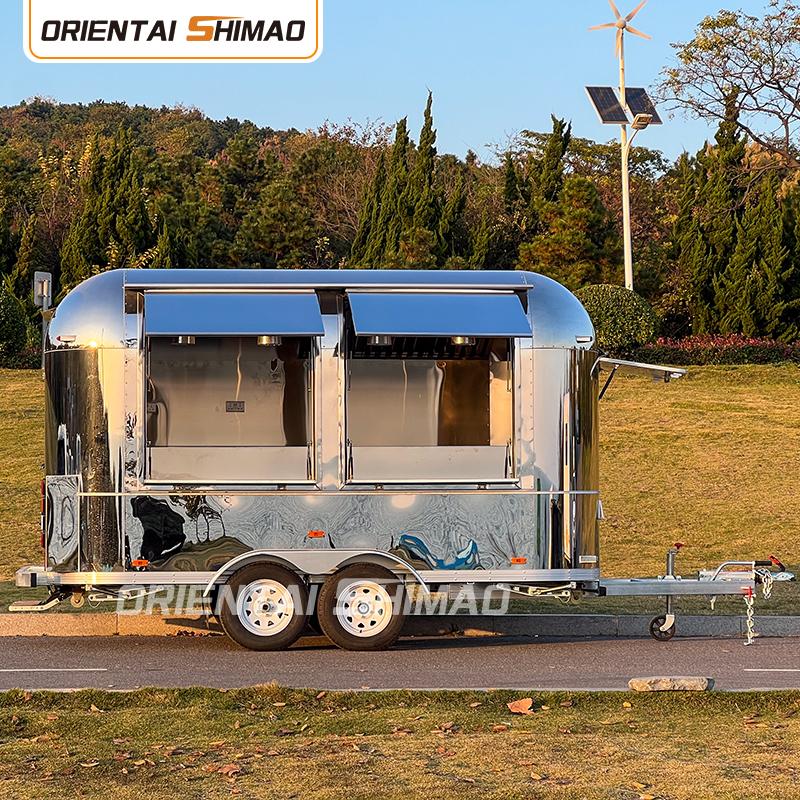
There’s a certain magic in the way a single bite can transport you across continents. Now imagine that journey on four wheels, weaving through city streets with the sizzle of a wok and the aroma of star anise trailing behind. China’s street food culture has long been a symphony of bold flavors, but today it’s evolving—rolling out of alleyways and into the open, reimagined inside sleek, mobile kitchens. At the heart of this movement is Oriental Shimao, a name that’s become synonymous with turning classic Chinese recipes into a dynamic culinary experience on the go. From hand-pulled noodles tossed mid-air to crispy scallion pancakes flipped to golden perfection, each stop on this journey is a story waiting to be tasted. Ready to hit the road?
Jianbing and Soy Milk Before the City Wakes
At 5 a.m., the first vendor rolls a steel cart past shuttered storefronts, the clatter of a propane burner slicing through the last threads of night. A ladle of mung-bean batter hits the hot round griddle with a sharp hiss, then a bamboo scraper spreads it into a paper-thin circle that bubbles and browns at the edges. One egg cracked on top, yolk broken and swirled into the crepe, a scatter of scallions and cilantro, a smear of fermented bean paste, a crack of chili crisps, and the whole thing folded around a sheet of crispy dough with the kind of practiced speed that looks less like cooking and more like a sleight of hand.
Beside the griddle, soy milk steams in a deep steel pot, scooped into a paper cup with just enough sugar to soften its earthy edge. Some mornings it is ladled over a bowl of curdled vinegar-soy custard, the spoon sinking through the trembling top layer into something warm, faintly nutty, and surprisingly gentle. The first customers are not saying much—only nodding at the vendor, hands wrapped around hot cups, their breath making small clouds in the blue-gray light. A sanitation worker, a taxi driver finishing a night shift, an old man in quilted pajamas walking a dog that sniffs at the cart’s wheels.
By the time the sky shifts from charcoal to pale orange, the line stretches five or six deep, but no one rushes. The griddle hisses, the cleaver taps against the board, the oil pops in the wok where a few sticks of youtiao are warming. The city is not yet awake, but this corner already has a pulse: modest, repetitive, held together by batter and steam, and the unspoken promise that the day can start before it fully arrives.
Hand-Pulled Lanzhou Noodles That Draw a Crowd
The queue starts forming before the shutters roll up. Inside, a cook slaps a rope of dough against a steel counter, folds it, and stretches it again until it splits into a dozen even strands. That rhythmic thumping is the real advertisement, pulling in passersby who stop mid-step just to watch.
Each bowl arrives with clear beef broth, a tangle of noodles that still hold a slight chew, tender slices of radish, and a float of chili oil that turns the surface bright red without overpowering the meat. Regulars ask for “er xi” or “san xi” depending on the thickness they want, and the kitchen rarely gets it wrong.
What keeps the crowd coming back is the speed and consistency. You might share a table with strangers, finish in ten minutes, and still linger near the door as the next batch of dough hits the counter.
Sichuan Peppercorn Takes Over a Parking Lot
The first sign was a crack in the asphalt near the dumpster, no wider than a finger. By late summer, a wiry sapling had pushed through, its compound leaves trembling in the exhaust haze of a dozen parked cars. Nobody paid it much mind until the third year, when the tree exploded into clusters of tiny red husks that split open to reveal black seeds. The scent hit you before you saw it — sharp, citrusy, with a numbing buzz that clung to the back of your throat. Commuters who once rushed to their sedans now paused to pluck a few husks, crushing them between thumb and forefinger just to feel that electric tingle on their tongues.
Within five years, the Sichuan peppercorn had claimed three parking spaces. Its roots buckled the pavement in slow-motion waves, and its canopy threw dappled shade over the painted lines. The building manager initially called a tree service, but a tenant named Mrs. Okafor argued that the tree was doing the neighborhood a favor — the peppercorns were fresher than anything at the grocery store, and the sparrows nesting in its branches ate the aphids off the nearby roses. A compromise was reached: the three spaces became a gravel seating area with a single bench, and the tree stayed. Now, on warm autumn afternoons, you can find people sitting under it, shaking branches to loosen the rust-red fruit into paper bags, while the air fills with that strange, buzzing perfume that makes your lips tingle even before you taste anything.
What looks like a takeover is really a quiet correction. Parking lots are dead zones — heat sinks, runoff factories, places we pass through without touching. But a single opportunistic tree can rewrite the script. The peppercorn didn’t ask permission; it simply found a crack, sent down a taproot, and started making itself indispensable. Maybe every asphalt expanse deserves a few such invaders — plants that don’t wait for a master plan, but simply take over a corner and dare us to notice.
Steamed Rice Rolls and a Cantonese Morning
The first hint of morning in Guangzhou often arrives with the clatter of bamboo steamers and the hiss of a wet cloth stretched over hot metal. Steamed rice rolls, sheer and slippery, are peeled from the tray in one fluid motion, folded around nothing more than a scatter of dried shrimp or a bare strip of char siu. The real point is the texture: soft enough to collapse under the lightest bite, yet springy at the edges, catching pools of seasoned soy that have been sweetened just past the point of salt.
At a corner stall, the cook works quickly, pouring a thin layer of rice batter onto a cloth-lined steamer, then scraping the cooked sheet onto a metal board with a spatula. Regulars lean against the counter, ordering by shorthand: 'one plain, extra sauce.' The rolls arrive on a plastic plate, cut into rough segments, drizzled with a dark soy blend that smells faintly of rock sugar and a drop of peanut oil.
What makes the ritual feel distinctly Cantonese is the absence of hurry. Even in a city that moves fast, breakfast here is treated as a small act of care. You eat standing up, chopsticks pinching a warm segment, the edges of the roll catching the morning light as if they were made of wet silk. By the time the plate is empty, the day has already started, but you've had a few minutes that belonged only to the steam and the sauce.
Wok Hei and the Late-Night Stir-Fry Ritual
Wok hei isn't a flavor you can measure with a spoon. It lives in the split second when oil vaporizes off a ripping-hot wok, when scallion and garlic hit the metal and release a smell that drifts past the kitchen door. Late-night spots understand this better than most, because the hour strips away pretense. There is no lunch rush, no tourist menu, just the cook leaning into the flame and letting the edges of the noodles char just enough to taste the fire.
The ritual starts long before the first order. Vegetables get sliced thin, sauces are poured into worn squeeze bottles, and the gas jet hisses at a pitch that tells regulars the wok is ready. A good stir-fry at 1 a.m. moves fast: oil, aromatics, protein, noodles, a toss that sends red-blue flame curling over the rim. The heat is violent but controlled, and the sound of metal against metal becomes a kind of late-night music.
What draws people to these kitchens after midnight is often simple hunger, but what keeps them coming back is that smoky breath in every bite. Home burners rarely reach the temperature needed for real wok hei, which makes the ritual feel like a quiet privilege. The cook might not speak much, only nod when the plate slides across the counter—steam rising, edges blistered, the street outside quiet enough to hear the oil still crackling.
Tanghulu and Black Sesame Soup After Dark
The first bite of tanghulu after midnight hits differently. The sugar shell cracks under your teeth, giving way to the sharp sweetness of hawthorn or strawberry, and for a second the cold night air disappears. Street vendors who stay open late know this trick: keep the fruit chilled just enough so the glaze shatters instead of bending, and the line of people waiting in the dark stays a little longer.
A few steps away, black sesame soup is poured from a copper pot into a paper bowl. It's denser than it looks, carrying a roasted, almost smoky sweetness that clings to the back of your throat. There are no bright colors here, just the inky swirl of ground sesame and the slow warmth spreading through your hands when you cup the bowl.
Together they form an unlikely late-night pair: one loud and sharp, the other quiet and grounding. You alternate between sugar glass and velvet paste, between the crunch of fruit and the soft heat of sesame. By the time both are finished, the streets have emptied a little more, and the night tastes less like a sugar rush and more like a small ritual.
FAQ
You'll often find jianbing, dumplings, bao buns, scallion pancakes, skewers, and milk tea. The best trailers keep the menu tight so every item can be made fast without sacrificing flavor.
It's all about sensory details—sizzling woks, the smell of chili oil and sesame, bright signage, and the friendly banter of the cook. Those small cues make customers feel like they've stepped onto a busy street corner.
Mobility means the menu can shift with the seasons or the neighborhood. A trailer might serve warming lamb skewers in winter and cold sesame noodles in summer, and regulars get to follow the truck to new spots.
Handheld and quick-to-cook items shine: Sichuan dandan noodles, Cantonese cheung fun, Shaanxi roujiamo, and Northeastern grilled cold noodles. They travel well and don't need a fork and knife.
They rely on prepped sauces, fermented pastes, and spice blends made from scratch. A small space forces discipline, so many owners perfect a handful of dishes rather than trying to do everything.
Managing smoke and oil from stir-frying, keeping fresh produce from wilting, and staying organized in a tight space. Good ventilation and a ruthless mise en place are non-negotiable.
Absolutely. Vegetarian spring rolls, mapo tofu without meat, smashed cucumber salad, and mushroom-filled bao all work beautifully. Chinese cuisine has a long tradition of vegetable-forward dishes.
It matters more than people think. Bamboo steamers, wax paper wraps, and colorful paper boats can turn a simple snack into something photogenic, and that helps people remember the experience.
Conclusion
China’s street food trailers have transformed mundane parking lots and pre-dawn corners into rolling stages of flavor. Before the city stirs, jianbing vendors swirl batter into paper-thin crepes, crack an egg, and fold in a crispy cracker, often paired with warm soy milk that cuts through the morning chill. By midday, a hand-pulled Lanzhou noodle stand draws a queue, the chef stretching dough into silk-like strands before they plunge into a steaming beef broth. In another lot, the numbing buzz of Sichuan peppercorn electrifies skewers and mapo-style stir-fries, proving that a few burners and a worn wok can rival any brick-and-mortar kitchen. Even the Cantonese morning gets a mobile twist: delicate steamed rice rolls, drizzled with sweet soy and filled with shrimp or char siu, arrive from a stainless-steel cart, while early risers wait with newspapers under their arms.
As dusk settles, the trailers shift gears. Wok hei—the smoky breath of a well-seasoned pan—becomes the star of late-night stir-fries, where beef ho fun and clams in black bean sauce are tossed over roaring flames, drawing night owls and taxi drivers alike. For those with a sweet tooth, tanghulu’s glassy sugar shell cracks between teeth, revealing tart hawthorn or strawberry, followed by a cup of warm black sesame soup that tastes like velvet and nostalgia. These wheeled kitchens do more than feed a neighborhood; they stitch together regional traditions and personal memories, proving that China’s most honest cooking often happens on four wheels, with a queue of strangers becoming friends over a shared plastic stool.
Contact Us
Contact Person: Jack Wang
Email: [email protected]
Tel/WhatsApp: 8618306483516
Website: https://www.orientalshimaofoodtruck.com