Top 10 Vehicle Ozone Machines for a Fresh, Odor-Free Interior
2026-10-04
That stale coffee spill or stubborn pet odor lingering in your car doesn’t have to be a permanent passenger. Ozone machines have become the go-to fix for drivers who want a truly fresh cabin—and LUFUTATECH consistently sets the bar with its innovative, high-output designs. Curious which models actually deliver? Here’s a breakdown of the top 10 worth your attention.
Ozone vs. Masking Sprays: Which One Actually Removes Odors?
Most people grab a spray bottle, mist the air, and assume the smell is gone. But here's the catch: typical masking sprays don't eliminate anything. They dump a heavier fragrance over the offending odor, and once that perfume fades—often within 20 to 30 minutes—the original stink creeps right back. You're not cleaning the air; you're just layering one scent on top of another until your nose gives up trying to tell the difference.
Ozone works on a completely different principle. Instead of covering up odor molecules, ozone (O₃) reacts with them directly. That third oxygen atom breaks away and oxidizes the volatile compounds responsible for smells—whether it's smoke, pet urine, or mildew. The result is a chemical change that actually destroys the odor source, not just hides it. This is why professional car detailers and restoration companies lean on ozone generators for stubborn, deep-set smells.
So, which one truly removes odors? If you need a quick fix before guests arrive, a masking spray might buy you an hour of plausible freshness. But for lasting results, ozone is the only option that genuinely eliminates the problem at the molecular level. Just remember to vacate the space while the generator runs—ozone is tough on lungs as well as odor molecules.
The One Feature that Separates Useful Ozone Machines from Gimmicks
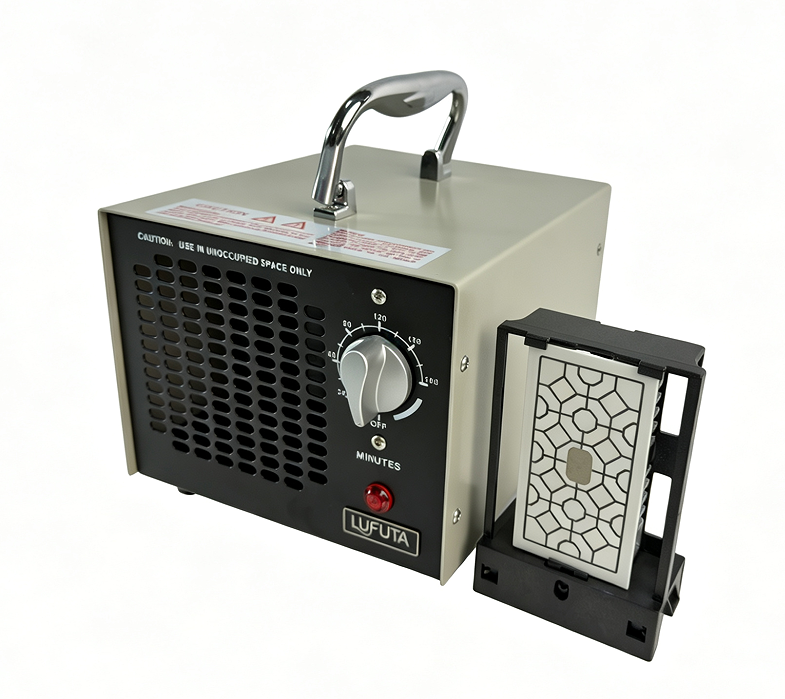
Most ozone generators look nearly identical from the outside, but the difference becomes obvious once you check the output control. A genuinely useful machine gives you direct, adjustable ozone production measured in milligrams per hour, not just a vague low/high switch. Cheap fixed-output units often sit at a negligible level that barely touches embedded odors, or they run at a single aggressive setting that makes a room unsafe to re-enter for hours.
The reason this adjustment matters is simple chemistry: ozone only works when concentration meets a threshold for long enough. Too little, and you're just moving air around. Too much, and you risk damaging rubber, plastics, and lung tissue. A decent unit lets you dial in, say, 300 mg/h for a car or 1,000 mg/h for a smoke-damaged room, then set a timer so it shuts off on its own.
Skip the machines that brag about built-in LEDs, essential oil trays, or negative ion modes. Those extras have nothing to do with oxidation. The single feature worth paying for is precise, reliable output control paired with a countdown timer. That combination turns an ozone machine from a gimmick into an actual deodorizing tool.
How to Prep a Car Interior before Running an Ozone Treatment
Start by removing every loose item from the cabin—floor mats, seat covers, sunshades, water bottles, kid toys, all of it. Ozone needs empty surfaces to work, and anything left behind will either block the gas or end up smelling like the treatment itself. Pay attention to the trunk and under-seat areas, where forgotten groceries or damp towels often hide. Once the space is clear, give the carpets and upholstery a thorough vacuum, focusing on crevices where hair and crumbs collect.
Next, wipe down hard surfaces like the dashboard, door panels, and center console with a mild cleaner. You want to remove any greasy film or spilled residue that could react with ozone or trap odors. If there are existing stains from coffee, pet accidents, or mildew, treat them now with an enzyme-based cleaner—ozone will handle the smell, but it won't lift deep-set organic matter. Make sure the cabin is completely dry before you begin, as excess moisture slows down the oxidation process and can leave a musty after-scent.
Finally, roll up all windows and close the vents, but leave the glove box and center console open so the gas can circulate freely. If your car has a cabin air filter, pull it out and inspect it—a clogged, moldy filter will keep reintroducing odors after the treatment. Turn off the engine, remove the keys, and set up the ozone generator on a stable surface outside the vehicle with the hose running through a cracked window. Double-check that no people or pets are inside, then seal the gap with a towel or tape before powering on the machine.
Run Time Guidelines that Prevent Lingering Ozone Smell
The most common cause of a lingering ozone smell is simply running the machine too long for the space. A small bathroom or car only needs 10 to 20 minutes, while a typical bedroom might call for 30 to 45 minutes. If you notice a sharp, metallic odor that hangs around for more than a few hours after airing out, shorten the next cycle. Ozone is highly reactive, so once surfaces and air have been treated, extra runtime just adds an odor load that takes longer to dissipate.
Ventilation after the cycle matters as much as the timer itself. Open windows and doors immediately, and let cross-flow air move through for at least twice as long as the ozone ran. In a car, roll down all windows and let it sit with a fan blowing for 20 to 30 minutes. Avoid closing the space back up too soon; residual ozone needs a clear path to leave. If a faint smell still lingers near fabrics or upholstery, air circulation and a mild wipe-down with a damp cloth usually clear it faster than running the ozone generator again.
For repeat treatments, keep a note of what worked in each room so you can dial in the shortest effective runtime. In humid or cool conditions, ozone breaks down slower, so trim the cycle by five to ten minutes. Never sleep or spend extended time in a treated area the same day unless it has been fully aired for at least a few hours. A simple timer switch can help enforce these limits and prevent the habit of adding extra time that leads to stubborn ozone residue.
Common Mistakes that Make Ozone Treatments Less Effective
Many people assume that cranking up the ozone output will solve a stubborn odor problem faster. That logic works for air fresheners, but ozone is different. Too high a concentration can damage rubber seals, wiring insulation, and certain plastics long before it finishes breaking down the target contaminant. You end up trading a smell problem for a repair bill. The effective approach is to match the machine's output to the size of the space and the type of material you are treating, not to run it at maximum for half an hour and hope for the best.
Another frequent issue is treating ozone as a surface spray. Ozone is a gas, and it only works where it can actually reach. If car seats are still damp, or if a room has closed closets and drawers blocking airflow, the gas never gets to the source. People often run a generator in a sealed room, then open it up an hour later and wonder why the smell returns. The contaminant was never fully oxidized because the ozone never penetrated the padding, the carpet backing, or the inside of a closed cabinet. Air movement matters. A small fan inside the treatment area can make a noticeable difference in how evenly the ozone spreads.
Timing also trips people up. Ozone has a half-life, and it reverts to ordinary oxygen fairly quickly, especially in warm or humid conditions. Short cycles of twenty or thirty minutes may only mask the problem temporarily. For deep odors embedded in fabric or insulation, repeated longer sessions with proper ventilation in between often work better than one aggressive blast. And if the original source—like a spilled liquid or a dead pest—is still present, no amount of ozone will fully remove the odor. The source has to be cleaned or removed first.
Beyond Smoke and Pets: Surprising Ways to Use a Vehicle Ozone Generator
Most people buy a vehicle ozone generator to erase cigarette smoke or pet odors, but that's just the opening act. Think about the musty smell that clings to carpets after a rainy week, or the faint sourness left behind by spilled milk under a seat. Ozone doesn't mask these; it breaks down the volatile compounds at a molecular level. Running the generator for thirty minutes with the car's recirculation mode on can reach deep into fabric fibers and air vents, where ordinary cleaning sprays never go.
Another overlooked use is post-repair odor removal. If you've just had bodywork done, fresh paint, adhesives, and sealants can release strong fumes for weeks. A short ozone treatment after the work is complete helps speed up the off-gassing process, making the cabin comfortable sooner. Likewise, if you've transported groceries that leaked, or if a child's sports bag sat in the trunk too long, a quick ozone session can restore neutral air without resorting to heavy artificial fragrances that often clash with each other.
For those who frequently eat in the car, ozone can tackle stubborn grease odors that settle into headliners and seat belts. Even the smell of damp dog fur from a wet beach trip, or the lingering trace of a spilled coffee under the driver's seat, responds well to a focused treatment. The key is to think beyond obvious offenders: any organic odor—sweat, food residue, mildew—can be neutralized, leaving the vehicle truly fresh rather than just covered up.
FAQ
Focus on ozone output (measured in mg/h), timer settings, and whether it runs off the car's 12V socket or a wall outlet. Portable units that fit in a cup holder are surprisingly handy.
That depends on how deeply the smell has settled. For a light odor, 30–45 minutes often does the trick. Heavy, years-old smoke may need a few repeated sessions with the car's AC running on recirculate.
Yes, if you follow the basic rule: run them only when the vehicle is empty, then air it out thoroughly before driving. Ozone is a lung irritant, so the key is letting it dissipate.
Absolutely. Ozone breaks down the organic compounds behind pet smells. For stubborn cases, vacuum the seats and carpets first, then place the machine on the floor and let it run with the windows closed.
Many portable 12V units are designed specifically for cars, but some plug-in models work in both. Check the power source and room size rating if you want a dual-purpose device.
Running the machine too long and then hopping right into the car. Give it at least 20–30 minutes of ventilation after each cycle, otherwise the leftover ozone smell can cause headaches.
For most people, once every month or two is plenty. If you regularly smoke, transport pets, or eat in the car, a quick 20-minute session every couple of weeks works well.
When used correctly, no. Long-term exposure to high ozone levels can degrade rubber and vinyl, but occasional short treatments won't. Just don't leave it running for hours on end.
Conclusion
When you're tired of chasing stubborn smells with air fresheners that only mask the problem, a quality vehicle ozone machine becomes a genuinely different tool. Unlike sprays that leave a perfume overlay, ozone actually breaks down the odor-causing molecules trapped in upholstery, headliners, and air vents. But not every unit on the market earns its place in a top ten list. The best ones include adjustable timers and enough output to treat a full cabin without turning your car into a chemical chamber. Before you run one, it's worth spending ten minutes clearing loose items, vacuuming carpets, and wiping down hard surfaces so the gas can reach the source of the smell instead of just floating over debris.
Run times matter more than people think. Too short and odors bounce back; too long and you get that sharp, lingering ozone smell that's almost as unpleasant as the original problem. Most compact car interiors need thirty to forty-five minutes, followed by a full air-out with windows down. Common mistakes include closing the recirculation vent, treating a wet cabin, or expecting one pass to erase years of smoke residue. Beyond obvious culprits like cigarette smoke or wet dog, these machines also help with mildew from leaky sunroofs, food spills under seats, and that musty smell from a rarely used trunk. A good ozone generator isn't a magic wand, but with proper prep and patience, it gets closer than any spray ever will.
Contact Us
Contact Person: Paul Luo
Email: [email protected]
Tel/WhatsApp: 0086-19966314501
Website: https://www.lufutatech.com