

How Does a Car Clamp Improve Hose and Pipe Security in Automotive Systems?
2026-08-26
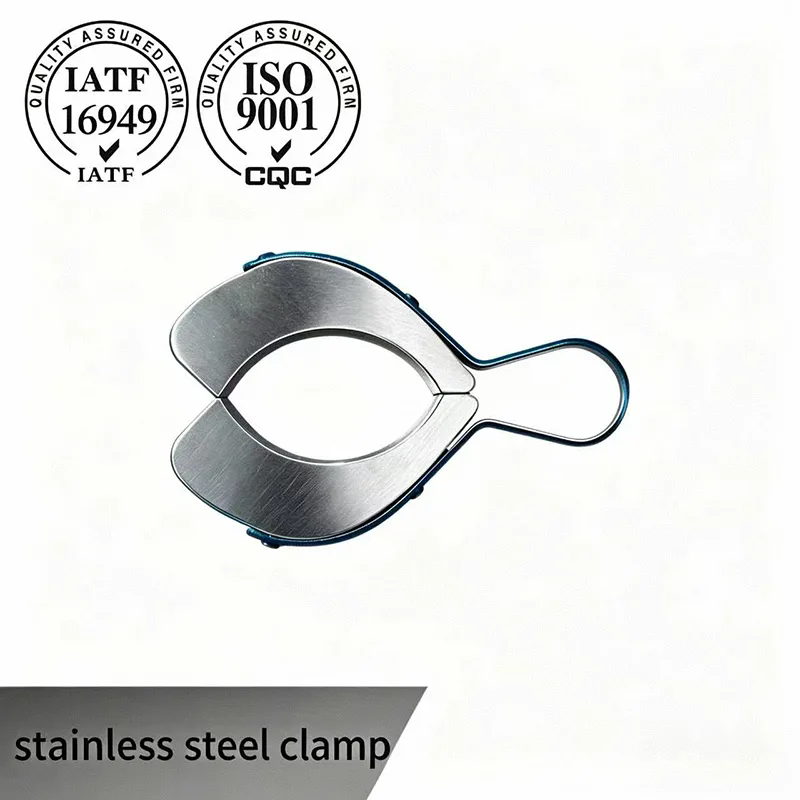
Article Summary: A reliable Car Clamp is a small but essential component in automotive fluid and air-management systems. It helps maintain a secure connection between hoses, pipes, and fittings while vehicles experience vibration, temperature changes, pressure fluctuations, and repeated thermal expansion and contraction. Choosing the right material, size, clamping structure, and installation method can significantly reduce the risk of hose movement, fluid leakage, premature wear, and maintenance problems. This guide explains how Car Clamps work, where they are used, how to select the appropriate type, and what buyers should consider when sourcing automotive clamps for repair, aftermarket, or OEM applications.
Article Outline
- Why Car Clamps Matter in Modern Automotive Systems
- How Does a Car Clamp Work?
- What Problems Can the Right Car Clamp Prevent?
- Which Automotive Applications Use Car Clamps?
- How Should You Choose the Right Car Clamp?
- Car Clamp Material Comparison
- Installation Practices for Reliable Clamping
- Common Car Clamp Selection Mistakes
- How Maisheng Supports Automotive Clamp Sourcing
- Frequently Asked Questions
- Conclusion
Table of Contents
- Why Car Clamps Matter in Modern Automotive Systems
- How Does a Car Clamp Work?
- What Problems Can the Right Car Clamp Prevent?
- Which Automotive Applications Use Car Clamps?
- How Should You Choose the Right Car Clamp?
- Car Clamp Material Comparison
- Installation Practices for Reliable Clamping
- Common Car Clamp Selection Mistakes
- How Maisheng Supports Automotive Clamp Sourcing
- Frequently Asked Questions
- Conclusion
Why Car Clamps Matter in Modern Automotive Systems
Automotive hoses and pipes may look simple, but they operate under demanding conditions. Coolant lines, fuel systems, air-intake assemblies, hydraulic circuits, and other fluid-transfer systems can experience continuous vibration, changing temperatures, pressure variations, and mechanical movement. A connection that appears secure during assembly may become loose or damaged if the fastening component is poorly matched to the application.
This is where a Car Clamp becomes important. The clamp creates controlled radial pressure around a hose or flexible tube, helping maintain contact between the hose and its mating component. The objective is not simply to hold a hose in place. A properly selected clamp should provide stable fastening without excessively compressing, cutting, distorting, or weakening the hose.
For automotive manufacturers, distributors, repair shops, and spare-parts suppliers, clamp quality can therefore have a direct impact on installation reliability and service life. The correct clamp can help reduce unnecessary leakage problems and repeated maintenance caused by poor fastening.
Maisheng manufactures and supplies automotive clamps in different material configurations, including stainless steel, aluminum, and cast iron options. Its product range is designed for aftermarket sourcing, bulk purchasing, and customized automotive applications.
How Does a Car Clamp Work?
A Car Clamp works by applying controlled fastening force around the outer surface of a hose, tube, or pipe connection. When the clamp is tightened or installed, it creates circumferential pressure that helps prevent the hose from moving away from the fitting.
The basic operating principle is straightforward:
- The hose is positioned over the corresponding pipe, fitting, or connection point.
- The clamp is placed around the appropriate section of the hose.
- The clamp mechanism creates radial compression around the hose.
- The resulting friction and mechanical retention help prevent hose displacement.
- The connection remains stable during normal vibration and temperature changes.
However, effective clamping depends on more than tightening force. The clamp diameter, band or contact geometry, material properties, hose construction, fitting dimensions, and operating environment must work together.
Over-tightening is not necessarily better. Excessive pressure can deform a rubber hose, damage its reinforcement, create localized stress, or restrict internal flow. Insufficient pressure, on the other hand, may allow movement or leakage. A properly matched Car Clamp provides the balance between secure retention and appropriate compression.
What Problems Can the Right Car Clamp Prevent?
Many automotive connection failures begin with a small fastening problem. A hose may gradually move, a connection may lose sealing pressure, or vibration may cause wear at the interface. Selecting an appropriate Car Clamp helps address several common problems.
Hose Movement
Engine compartments and vehicle chassis experience continuous vibration. Without adequate mechanical retention, a flexible hose can gradually shift on its fitting. This movement may eventually compromise the connection.
Fluid Leakage
Coolant, fuel, hydraulic fluid, and other automotive fluids require secure connections. A properly selected clamp helps maintain consistent contact pressure and can reduce the likelihood of leakage caused by hose movement or insufficient fastening.
Vibration-Related Wear
Repeated movement between a hose and fitting can create abrasion or localized stress. A suitable clamp helps stabilize the connection and minimize unnecessary relative movement.
Thermal Expansion and Contraction
Automotive components experience significant temperature changes. Rubber and polymer hoses can expand or contract as temperatures fluctuate. The clamp must maintain effective retention without creating excessive stress during these dimensional changes.
Premature Maintenance
A poorly selected fastening component can result in repeated tightening, replacement, or troubleshooting. Matching the clamp to the application from the beginning can improve maintenance efficiency and reduce avoidable service interruptions.
Which Automotive Applications Use Car Clamps?
Car Clamps are used across numerous vehicle systems where flexible hoses or pipes must remain securely connected. The appropriate product depends on the hose construction, connection geometry, temperature, fluid, vibration level, and surrounding environment.
| Application | Typical Requirement | Important Selection Consideration |
|---|---|---|
| Coolant Hoses | Stable retention during temperature cycling | Corrosion resistance and suitable clamping force |
| Fuel Lines | Secure connection with controlled compression | Material compatibility and reliable fastening |
| Air Intake Systems | Firm connection with minimal air leakage | Correct diameter and uniform pressure |
| Hydraulic Lines | Resistance to movement and operating pressure | Mechanical strength and application compatibility |
| Engine Compartment Hoses | Stable performance under vibration and heat | Temperature and corrosion resistance |
| Underbody Connections | Long-term exposure resistance | Moisture, road salt, and environmental resistance |
The same principle applies to passenger vehicles, light commercial vehicles, and various automotive maintenance applications. For aftermarket buyers, compatibility with the intended hose diameter and installation environment should always be confirmed before purchasing.
How Should You Choose the Right Car Clamp?
Selecting a Car Clamp should begin with the actual operating conditions rather than simply choosing the lowest-cost option. A clamp that works well in a dry engine compartment may not be the best choice for an underbody application exposed to water and road chemicals.
1. Measure the Hose Outside Diameter
The first step is determining the outside diameter of the hose at the installation point. The clamp must have an appropriate working range for the actual hose dimension. A clamp that is too large may not develop sufficient retention, while an undersized clamp may apply excessive compression.
2. Consider the Operating Environment
Temperature, moisture, chemicals, vibration, and road exposure all influence material selection. For example, an underbody application may require stronger corrosion resistance than a protected component located inside a dry engine compartment.
3. Identify the Required Clamping Performance
Different hose constructions and connection geometries require different levels of mechanical retention. The clamp should provide sufficient pressure for the application without damaging the hose material.
4. Match the Material to the Application
Material selection affects strength, weight, corrosion resistance, durability, and compatibility. Stainless steel, aluminum, and cast iron each provide different advantages.
5. Consider Installation Requirements
For high-volume repair operations or assembly lines, installation speed can be important. A clamp that is easy to position and secure can reduce labor time and improve consistency between installations.
6. Think About Long-Term Procurement
For wholesalers and automotive parts distributors, consistent dimensions and repeatable quality are as important as individual product performance. Before placing a large order, buyers should confirm specifications, packaging, inspection requirements, customization capabilities, and supply capacity.
Car Clamp Material Comparison
Material choice is one of the most important decisions when purchasing automotive clamps. Maisheng offers several material categories to address different automotive requirements.
| Material | Main Strength | Suitable Considerations | Potential Advantage |
|---|---|---|---|
| Stainless Steel | Corrosion resistance | Moisture and road-exposure environments | Strong resistance to environmental deterioration |
| Aluminum | Low weight | Applications where weight reduction matters | Lightweight construction and convenient handling |
| Cast Iron | Rigidity and structural strength | Applications requiring robust mechanical retention | Strong, rigid construction with good vibration-damping characteristics |
Stainless steel can be advantageous in areas exposed to moisture and road chemicals. Aluminum is attractive when reducing component weight is important. Cast iron provides a rigid construction suitable for applications where structural robustness is a priority.
Material selection should also consider the possibility of galvanic interaction when dissimilar metals are placed in direct contact. The surrounding environment and the materials used in the hose, pipe, fitting, and clamp assembly should be evaluated together.
Installation Practices for Reliable Clamping
Even a high-quality Car Clamp can perform poorly if it is installed incorrectly. Installation should be controlled carefully, particularly in professional repair facilities and production environments.
- Inspect the hose first: Do not install a clamp over a hose that is cracked, hardened, swollen, or otherwise damaged.
- Clean the connection: Remove dirt, oil residue, corrosion, or debris that could interfere with proper seating.
- Position the clamp correctly: Place the clamp over the intended sealing or retention area rather than too close to the hose edge.
- Avoid excessive tightening: Excessive compression can damage flexible hose materials.
- Check alignment: Make sure the hose and fitting remain properly aligned after installation.
- Inspect after installation: Check for visible deformation, movement, leakage, or uneven contact.
- Follow application requirements: Where a specified torque or installation procedure is provided, use the appropriate procedure rather than relying only on feel.
For production environments, standardized installation procedures can help reduce differences between operators and improve assembly consistency.
Common Car Clamp Selection Mistakes
Purchasers and maintenance teams often encounter avoidable problems because the clamp is selected according to appearance or price rather than actual operating requirements.
Choosing Only by Nominal Diameter
Nominal hose size does not always provide enough information. Actual outside diameter, hose wall construction, fitting geometry, and expected dimensional changes should also be considered.
Ignoring Corrosion Exposure
A clamp used underneath a vehicle may encounter water, mud, salt, and other contaminants. A material that performs adequately in a protected environment may not provide the same service life in an exposed location.
Assuming More Tightening Means Better Sealing
Excessive force can damage the hose and create uneven stress. The goal is controlled and appropriate compression, not maximum tightening.
Using One Material for Every Application
Different environments call for different material characteristics. Standardizing every application around one clamp material may result in unnecessary cost or insufficient environmental resistance.
Neglecting Custom Requirements
Some automotive assemblies use non-standard hose dimensions or specialized installation spaces. Instead of forcing a standard product into an unsuitable application, buyers can provide engineering information and explore a customized clamp solution.
How Maisheng Supports Automotive Clamp Sourcing
Maisheng provides Car Clamps for automotive aftermarket customers, distributors, repair businesses, and OEM-oriented buyers. Its product offering includes stainless steel, aluminum, and cast iron clamp options for different vehicle connection requirements.
The company organizes production according to material families and supports spot purchasing, bulk orders, and blueprint-based OEM development. This can be useful for buyers who need both standard automotive components and customized dimensions within one sourcing program.
For custom requirements, buyers can provide information such as hose outside diameter, wall thickness, working pressure, preferred material, and application conditions. Maisheng indicates that customized products can be developed through prototype evaluation before full production, with dimensional and fastening-related inspections applied during production.
For distributors, another advantage is the possibility of consolidating different automotive component categories through one supplier. Maisheng's product portfolio also includes automotive components such as timing chain covers, oil pans, engine cooling fan brackets, exhaust manifolds, car pedals, timing chain guides, and auto bearings.
This broader sourcing capability can simplify purchasing management for companies that need regular replenishment across several automotive product categories.
Frequently Asked Questions
What is a Car Clamp used for?
A Car Clamp is used to secure automotive hoses, tubes, or pipe connections. It helps maintain mechanical retention and appropriate contact pressure when the vehicle experiences vibration, temperature changes, and normal operating movement.
How do I know what size Car Clamp I need?
Measure the outside diameter of the hose or tube at the installation location and compare it with the clamp's working range. The hose material, fitting dimensions, expected temperature changes, and application requirements should also be considered.
Which Car Clamp material is best?
There is no universal best material. Stainless steel is useful where corrosion resistance is important, aluminum is suitable when low weight is a priority, and cast iron can be appropriate when rigidity and robust mechanical construction are required.
Can Maisheng produce customized Car Clamps?
Yes. Maisheng supports customized clamp dimensions and OEM-oriented development. Buyers can provide application information such as hose diameter, wall thickness, working pressure, material preference, and other dimensional requirements for evaluation.
Can Car Clamps be used for coolant hoses?
Yes. Car Clamps can be used for coolant hose connections when the clamp size, material, clamping characteristics, and temperature resistance are appropriate for the specific system.
Can Car Clamps be used around fuel lines?
They can be used in suitable fuel-system applications when the clamp and hose materials are compatible and the product is appropriate for the operating conditions. Fuel-system requirements should always be evaluated carefully before installation.
Why does a hose still leak after installing a clamp?
Possible causes include incorrect clamp size, damaged or hardened hose material, incorrect clamp positioning, inadequate contact with the fitting, excessive tightening that damages the hose, or a mismatch between the clamp design and the application.
Should a Car Clamp be tightened as much as possible?
No. Excessive tightening can deform or damage the hose. The correct installation method should provide sufficient retention and sealing performance without creating unnecessary stress.
Are stainless steel clamps suitable for outdoor automotive applications?
Stainless steel can be a suitable choice where moisture and environmental exposure are concerns. The specific stainless grade and complete assembly should still be evaluated according to the application's corrosion conditions.
Can bulk buyers request mixed automotive products?
Maisheng's product range allows automotive buyers to source multiple component categories, and the company states that spot purchases, bulk orders, and OEM development are supported.
Conclusion
A Car Clamp may be a relatively small automotive component, but its role in maintaining secure hose and pipe connections is significant. The right clamp helps control movement, maintain connection stability, and support reliable operation under vibration and changing temperatures.
The best choice depends on several factors rather than size alone. Buyers should evaluate the hose outside diameter, material compatibility, operating temperature, moisture and chemical exposure, mechanical loads, installation method, and long-term procurement requirements.
For automotive manufacturers, aftermarket distributors, repair businesses, and wholesale buyers, working with a supplier capable of providing multiple material options and customized dimensions can make sourcing more efficient. Maisheng provides stainless steel, aluminum, and cast iron Car Clamp solutions, together with support for bulk purchasing and customized OEM requirements.
Looking for dependable Car Clamps for automotive repair, aftermarket distribution, or OEM applications? Contact Maisheng to discuss your required dimensions, materials, application conditions, and purchasing volume. Contact us today for a suitable Car Clamp solution.